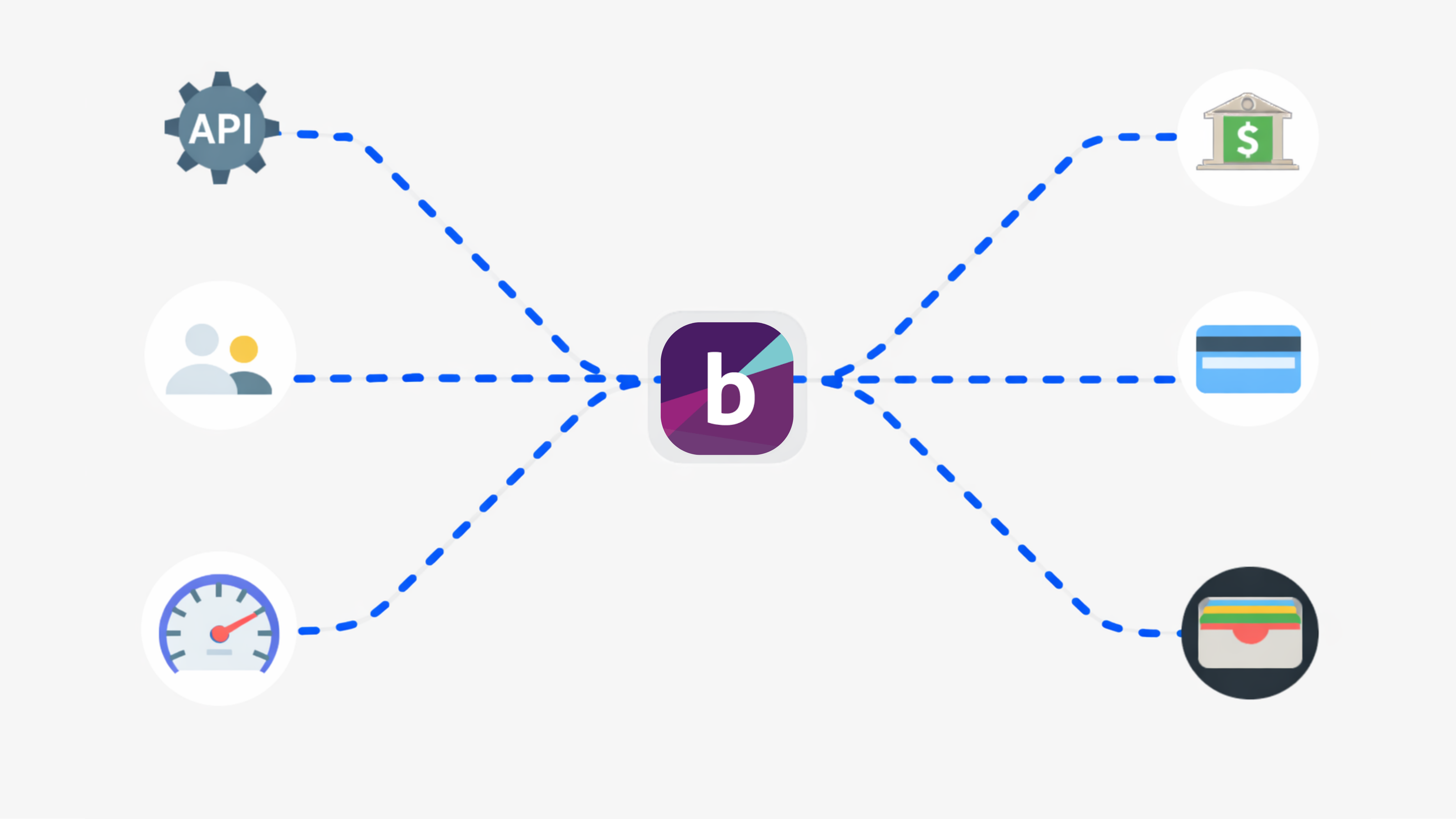

Real-time payment rails, embedded finance, and rising customer expectations have pushed payments into the center of how businesses operate.
What was once an action that ran quietly in the background is now directly tied to how companies launch products, serve customers, and manage operations.
As a result, choosing a payments program provider has become a far more consequential decision. The wrong partner introduces risk, slows down innovation, and fragments critical systems across the business, making choosing a payments partner an important infrastructure decision.
For enterprise buyers, that shift is showing up in more complex questions:
- Can we launch without building everything ourselves?
- How quickly can we move money?
- Can we control how funds are used after they’re sent?
- Will this hold up under regulatory scrutiny?
These questions are being driven by broader changes across the payments landscape, from the rise of unified platforms to the expectation of real-time money movement.
This article explores six key trends shaping payments in 2026 and how they translate into practical evaluation criteria for choosing the right partner.
Trend #1: Payments Are Moving from Systems to Platforms
Companies aren’t just sending one type of payment anymore - they’re managing payroll, incentives, vendor payouts, reimbursements, and customer disbursements, often across different regions and rails.
This growing complexity is pushing businesses away from stitching together multiple payment systems and toward unified platforms that bring everything into one place. Instead of coordinating across vendors, businesses can operate from a single system that supports multiple payment types and use cases.
In a fragmented setup, each of these use cases can require a different provider. That leads to multiple integrations, inconsistent reporting, and a constant need to reconcile data across systems. Over time, what starts as a workable solution becomes difficult to scale and even harder to manage.
When evaluating providers, this is where the differences become clear:
- Unified infrastructure across payment types: A platform should support cards, real-time payouts, and transfers within the same system, allowing teams to manage different use cases without switching between tools.
- Flexible payment rails: Businesses should be able to choose how money moves, whether through card-based disbursements, direct-to-bank transfers, virtual cards, or digital wallets, depending on the use case and user preference.
- Consistent reporting and ledgering: Payment data should be centralized, with a single source of truth for reconciliation, tracking, and financial oversight.
- Shared APIs and integrations: Rather than building separate integrations for each payment flow, a platform should provide a consistent way to connect payments into existing systems and workflows.
- Operational simplicity: Managing payments through a single platform reduces the need to coordinate across multiple vendors, making it easier to launch, manage, and scale programs over time.
Trend #2: Real-Time Payments Are the Default Expectation
When people are used to instant transactions in other areas of their lives, waiting days for funds to arrive starts to feel outdated. Real-time payments are becoming the baseline across a growing number of use cases, from gig worker payouts to insurance claims.
When evaluating providers, buyers should look beyond surface-level “instant payment” claims and focus on how reliably and at what scale real-time capabilities are delivered:
- Real-time payout infrastructure: The provider should support instant disbursements across relevant payment rails.
- Mass payout capabilities: Businesses need to be able to send large volumes of payments simultaneously without delays or system bottlenecks.
- Fallback payment options: Real-time rails aren’t always available in every scenario. A strong platform should automatically support alternative methods to ensure payments still go through without disruption.
- Event-driven payment triggers: Payments should be able to move when an action occurs rather than being tied to fixed batch schedules.
Trend #3: Compliance Is a Product Requirement
As regulatory expectations increase, compliance can no longer sit outside the payments flow as a separate process. Requirements such as KYC, AML monitoring, transaction screening, and audit readiness are now expected to be built directly into the platform.
This is especially important for organizations operating across multiple jurisdictions or handling high volumes of transactions, where even small gaps in oversight can have significant consequences.
When evaluating providers, buyers should look closely at how deeply compliance is embedded into the platform:
- Built-in security and certifications: Look for providers with established standards such as PCI certification and SOC 2 compliance, supported by secure infrastructure designed to handle sensitive financial data.
- Integrated compliance workflows: Processes like KYC/KYB, AML monitoring, and transaction screening should be automated and embedded within the payment flow, rather than handled through separate systems or manual checks.
- Audit-ready reporting: The platform should provide a complete, traceable record of transactions, with clear audit trails that can support internal reviews and regulatory requirements.
- Ongoing monitoring and risk controls: Providers should support continuous monitoring of transactions to detect anomalies, flag potential fraud, and maintain regulatory alignment over time.
Trend #4: Enterprises Are Taking Greater Control Over How Funds Are Used
Whether it’s distributing disaster relief, managing corporate expenses, or issuing funds tied to specific programs, businesses are looking for ways to define how money can be spent after it’s received.
Without that level of control, organizations can face misuse of funds, increased fraud exposure, and reduced effectiveness of their programs. In some cases, it can also create compliance challenges.
As a result, buyers are increasingly evaluating how well providers support programmable, controlled payment experiences:
- Granular spend controls: Businesses should be able to define where and how funds can be used, including restrictions based on merchant categories, transaction types, or spending limits.
- Programmable payment rules: Payments should be configurable with specific conditions, allowing organizations to tailor how funds behave across different use cases and user groups.
- Real-time visibility into usage: Access to up-to-date transaction data allows teams to monitor how funds are being spent and respond quickly if something looks off.
Trend #5: Speed to Market Is a Competitive Advantage
The ability to launch new payment programs quickly is becoming a meaningful differentiator. Whether it’s rolling out a spend card, launching a loyalty initiative, or enabling a new payout flow, timing matters.
Fortunately, speed no longer has to come at the cost of complexity. Businesses don’t need to build payment infrastructure from scratch to get to market. Turnkey infrastructure, pre-built integrations, and configurable platforms now make it possible to launch in months rather than years.
When evaluating providers, buyers should focus on how easily and quickly new programs can be brought to life:
- Turnkey infrastructure: Providers should offer ready-made payment rails, established banking and network integrations, and pre-configured components that reduce the need for extensive internal build efforts.
- Developer-friendly APIs: Flexible APIs make it easier to integrate payments into existing systems and workflows, allowing teams to build and iterate without starting from zero.
- White-label capabilities: The ability to launch under your own brand, without exposing underlying providers, helps accelerate go-to-market timelines while maintaining a consistent user experience.
- Reduced dependency on multiple partners: Consolidating infrastructure within a single platform removes the delays that often come with coordinating across different vendors.
Trend #6: Payments Are Becoming Part of the Customer Experience
Payments are a meaningful part of how customers, employees, and partners interact with a business. A payment that is slow, confusing, or disconnected from the brand can create friction. A payment that is fast, intuitive, and well-integrated can strengthen engagement and trust.
This shift reflects a broader change in expectations. People don’t separate “payments” from “product experience” - they see it as one continuous interaction.
When evaluating providers, buyers should consider how well payment experiences can be integrated into their broader product and brand:
- White-label capabilities: Payment tools should be fully branded, allowing businesses to deliver a seamless experience without exposing underlying providers.
- User experience design: Interfaces for accessing funds, tracking transactions, and managing accounts should be intuitive and aligned with modern digital expectations.
- Multi-channel access: Users should be able to interact with payments across physical cards, virtual cards, and mobile wallets, depending on what suits their needs.
- Consistency across touchpoints: The payment experience should feel cohesive across different channels and use cases, reinforcing trust and familiarity.
A Practical Buyer’s Checklist for 2026
Rather than assessing features in isolation, buyers should step back and consider how well a platform supports the full lifecycle of their payment programs, from launch to scale to ongoing management.
A strong payments partner should be able to answer these questions clearly:
- Platform architecture: Is this a unified platform, or will you need to coordinate across multiple vendors to support different payment types and use cases?
- Real-time payment capabilities: Can the platform reliably support instant payouts and high-volume disbursements when timing matters?
- Built-in compliance: Are regulatory requirements such as KYC, AML, and audit reporting embedded into the platform, or will your team need to manage them separately?
- Control and programmability: Can you define how funds are used after they’re distributed, with the ability to set rules, restrictions, and limits?
- Speed to market: How quickly can new payment programs be launched, and how much internal effort is required to get there?
- Customer experience: Can payments be fully integrated into your brand and product experience, across cards, wallets, and user interfaces?
If any of these areas require significant workarounds, it’s usually a sign that complexity will increase over time rather than decrease.
The Right Payments Partner Shapes How Money Moves
Payments are an integral part of the infrastructure that shapes how businesses operate, compete, and grow.
As platforms replace fragmented systems, real-time expectations increase, and businesses take greater control over how funds are distributed and used, the standard for what a payments partner should deliver has fundamentally changed. Staying aligned with these shifts is about building the flexibility to adapt as expectations continue to evolve.
Berkeley Payment Solutions brings together real-time money movement, configurable prepaid programs, and a unified platform designed to support a wide range of use cases, from payroll and incentives to disaster relief and vendor payouts.
If your organization is looking to move faster, simplify operations, and maintain control as they scale, contact Berkeley to explore your options.
