
Put clear rules around how cards can be used.
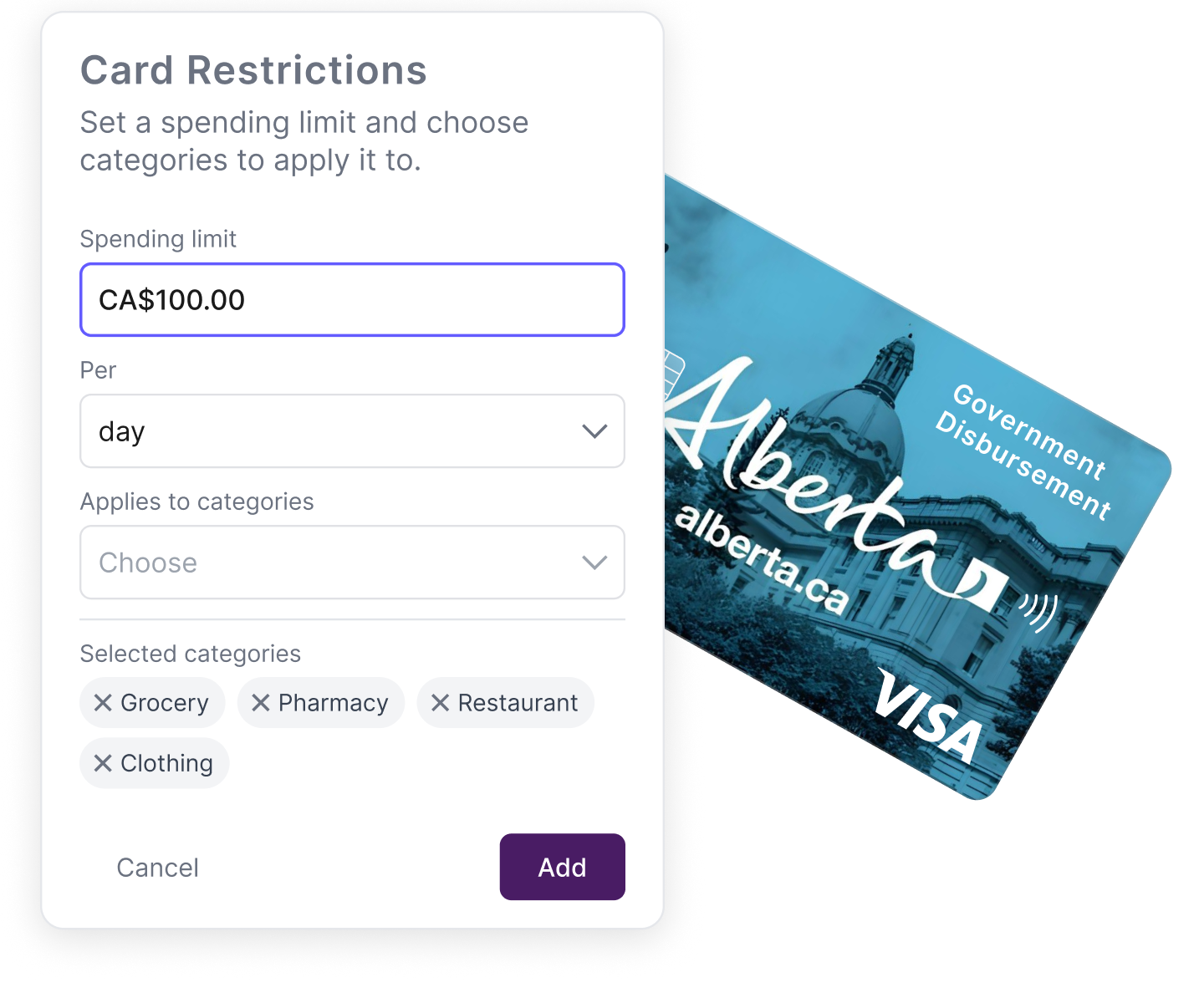
Configure card controls around how your program is designed to work. Restrict where cards can be used, set spending and load limits, and define rules based on merchant categories, location and transaction type, including ATM access.
Berkeley supports configurable spending controls for card programs operating in the United States and Canada, with options determined by the program structure and configuration.
On this page
What you can control
Set the rules that govern every transaction.
Spending controls help make sure funds are used as intended. Depending on your program, rules can be applied at the card or cardholder level, with controls configured to fit individual requirements or a broader program.
Merchant category restrictions
Allow or block spending at specific types of merchants using merchant category codes (MCCs). Help direct funds toward eligible purchases and away from categories outside your program’s intended use.
Transaction and spending limits
Set limits on individual transactions and total spending over defined periods, such as daily or monthly limits. Apply limits across eligible spending categories where supported.
Load amount limits
Control how much money can be loaded onto a card, helping keep funding within the parameters of your program.
Geographic restrictions
Allow or block transactions based on the merchant’s country, helping define where cards can be used within your program’s supported markets.
Merchant-specific controls
Where supported, use merchant identifiers to restrict spending at particular merchants, rather than relying only on broad merchant categories.
Card-present and online spending
Configure rules based on how a transaction takes place, including whether the card is physically present, where supported by the card program.
ATM access and cash withdrawals
Configure whether cards can be used to withdraw cash at ATMs. ATM access can be enabled or disabled based on the program's requirements, with applicable withdrawal fees and program rules defined as part of the card configuration.
ATM operators may charge their own surcharge, separate from any program fees. Availability depends on the card, network and program configuration.
Card-level and cardholder-level rules
Apply controls to individual cards or cardholders, or use group-level configurations where available. The right structure depends on how your program assigns cards, manages users and oversees spending.
Configure controls around your program
The right rules depend on what the card is for.
A rewards card, employee expense card, relief payment card and payroll card have different jobs. Their controls should reflect the purpose of the funds, how recipients are expected to spend them and the level of oversight the program requires.
For example:
Rewards and incentives
Restrict spending to eligible merchant categories or set limits that reflect the terms of an incentive program.
Employee and commercial spending
Set transaction and periodic spending limits, with restrictions that help align card use with company purchasing policies.
Relief and targeted disbursements
Configure restrictions to help keep funds within the intended use of a program, subject to the controls available for the card construct.
Payroll and payment programs
Set appropriate load and spending parameters while giving recipients access to funds through the supported card experience.
The goal is not to add rules for the sake of it. It is to establish controls that reflect the program’s purpose without creating unnecessary friction for legitimate transactions.
Manage controls in operation
Put the right controls in place, then make them manageable.
Spending controls need to work as part of the broader program, not as a standalone feature. Berkeley works with you to define the control structure for your card program and supports the infrastructure behind transaction authorization and ongoing program operations.
Authorized teams can use the operational tools available for their program to oversee card activity and manage supported workflows. Controls can be configured around the program’s requirements, with specific capabilities depending on the card construct and implementation.
For teams integrating directly with Berkeley, developer documentation provides technical guidance on supported functionality.
Berkeley’s platform
Controls are one part of a program built to run.
Berkeley brings together card issuing, transaction processing, program controls and operational support. That means your spending rules can be designed alongside the funding model, cardholder experience and workflows that keep your program running.
You get more than a way to restrict transactions. You get a partner to help define how the program should work and the infrastructure to support it.
Tell us what you want to launch.
Tell us what you're building, where it needs to operate and how the money needs to move. We'll help identify the right program and the infrastructure behind it.