
Build the product. Berkeley runs the infrastructure behind it.
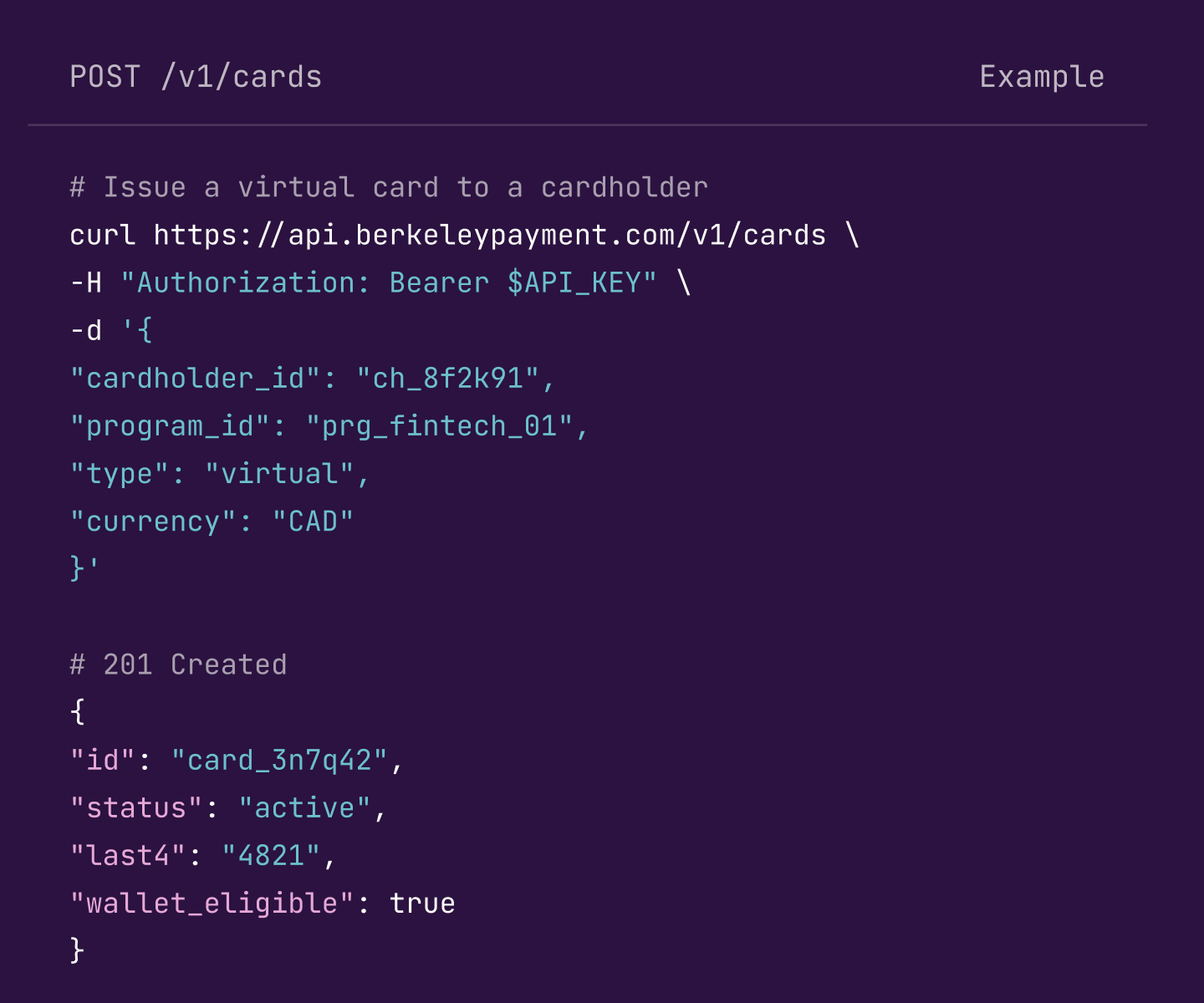
The API is how your application connects to Berkeley.
It is not the whole product.
Behind the API are the payment infrastructure, processing, ledgering, bank and network relationships, compliance processes and operational workflows required to keep a live program running.
On this page
Build the payment layer without building it all yourself.
Card issuing
Launch branded physical and virtual cards on Visa or Mastercard, with digital wallets, spending controls, lifecycle management and the operating support behind the program.
Processing
Connect authorization and transaction workflows to the broader payment program, with the records and operational processes around them.
Money movement
Initiate payouts and other money movement through the rails available to the program.
Accounts and ledgering
Work with accounts, balances, transactions and ledger records that connect to cards and money movement.
Depending on the program, Berkeley can provide the ledger or connect into the client's existing system of record.
KYC, KYB and onboarding
Build customer and user onboarding into the broader program rather than treating identity and compliance as a separate workflow.
Build once. Operate with a team around you.
The developer experience should not end when the integration is complete.
Once a program goes live, someone still needs to handle:
Funding
Transaction exceptions
Reconciliation
Disputes
Fraud operations
Card lifecycle
Support
Program reporting
That operating layer is part of the Berkeley model.
One API. Multiple payment rails.
Depending on the program, money movement can connect to multiple domestic and card-based rails.
Canada
Interac
EFT
USA
ACH
Supported card-based payout rails
Both markets
Visa Direct
Mastercard Move
Cross-border program flows
The available rails depend on the program, geography, destination and applicable requirements.
Go from documentation to production.
Documentation
Understand the concepts before you start integrating.
API reference
See endpoints, parameters, responses and error handling.
Guides and recipes
Start with the workflow you are trying to build rather than figuring out the API one endpoint at a time.
The technical integration is only the beginning.
You can build the customer experience yourself.
Berkeley can provide the infrastructure, processing, ledger and operating model behind it.
That distinction is what lets your engineering team focus on building the product instead of becoming the payment operations team too.
APIs for integration. A platform for day-to-day operations.
Use Berkeley’s APIs and integration options to connect payment capabilities to your systems. Berkeley’s platform supports the operational workflows available to your team, so integration and day-to-day program management work together.
Tell us what you want to launch.
Tell us what you're building, where it needs to operate and how the money needs to move. We'll help identify the right program and the infrastructure behind it.